Clothing
It is an aspect which usually tends to be underestimated, both in professional and amateur.
The choice of clothing however plays an important role in safety.
Suitable work clothes need to have several characteristics.
They must first be comfortable for the operator and allow maximum freedom of movement: these, as well as allowing a better performance of the work, ensure less fatigue at the end of the day.
They should be expendable, and should be able to be dirtied or destroyed without hesitation: concentration must be entirely devoted to the work at hand, there should be no concerns of getting dirty or ruining an outfit.
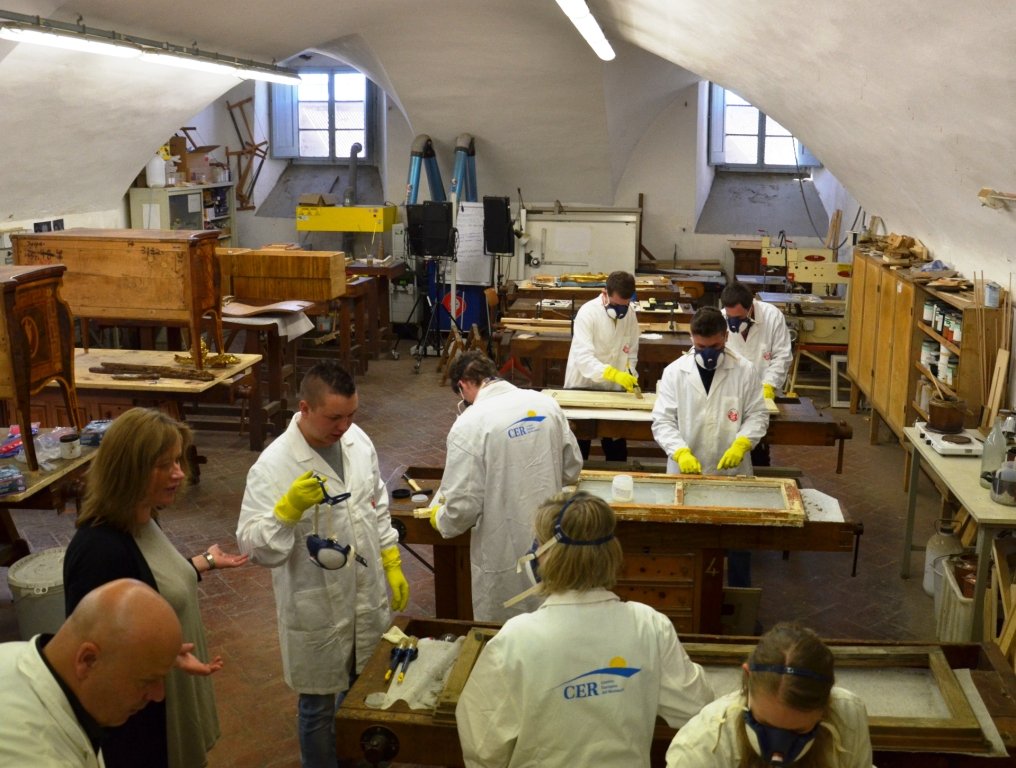
Must be as close fitting as possible (within the limits of comfort) and without fluttering accessories, i.e. without straps, suspenders, fringes or any other pieces that could get tangled or even worse, be snagged by machinery in movement. The overall coat is an ideal garment for painting, but it is certainly appropriate when working a piece of wood or using circular saw, and in any case it is always best to keep in buttoned up. Overalls should not have the sagging hooking straps; if they are too long it is better to tuck them under the bib, for reasons mentioned above; overall suspenders are more stable when crossed on the back.
Personal protective equipment
In the field of restoration, given the versatility of the work done, different types of protection are needed. Too often, however, in the mistaken belief of not being subject to risk, workers forget the importance of such devices.
The fact that, after all, a bit of dust will not kill anyone, that flying splinters will not easily end up in an eye, that a little solvent on the hands is not a great problem, that loud noises can be endured, frequently results in workers forgetting to protect themselves.
Usually when an unusual task is to be performed, for example with a solvent rarely used, or requiring the use an unfamiliar power tool, a number of protective measures are generally taken. When operations carried out are familiar, protective measures tend to be less because confidence leads to a lowering of the guard. This mechanism is very dangerous, but human, and risks can still however be limited.
In this field there are also risks that are not perceived, since the damage caused by them is not immediate. Anyone, metal welding, would remember to wear welding goggles, but in handling common solvents (alcohol, nitro, acetone) protective gloves and masks for solvents are often overlooked. This is because, while in the first case the damage is immediately perceptible, in the second case it is erroneously considered null, since the damage caused is not direct, but chronic. Chronic damage occurs after a long time with often irreversible consequences. (Example: silicosis solvent dust and allergies). Hence the importance of personal protective equipment, one that should never be underestimated even if the operation being carried out is familiar. Moreover, for most of the protective wear used in restoration, only a minor effort is required.
A brief review of the protection devices is as follows:
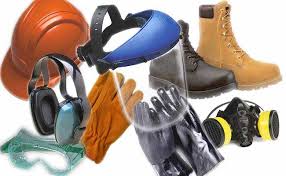
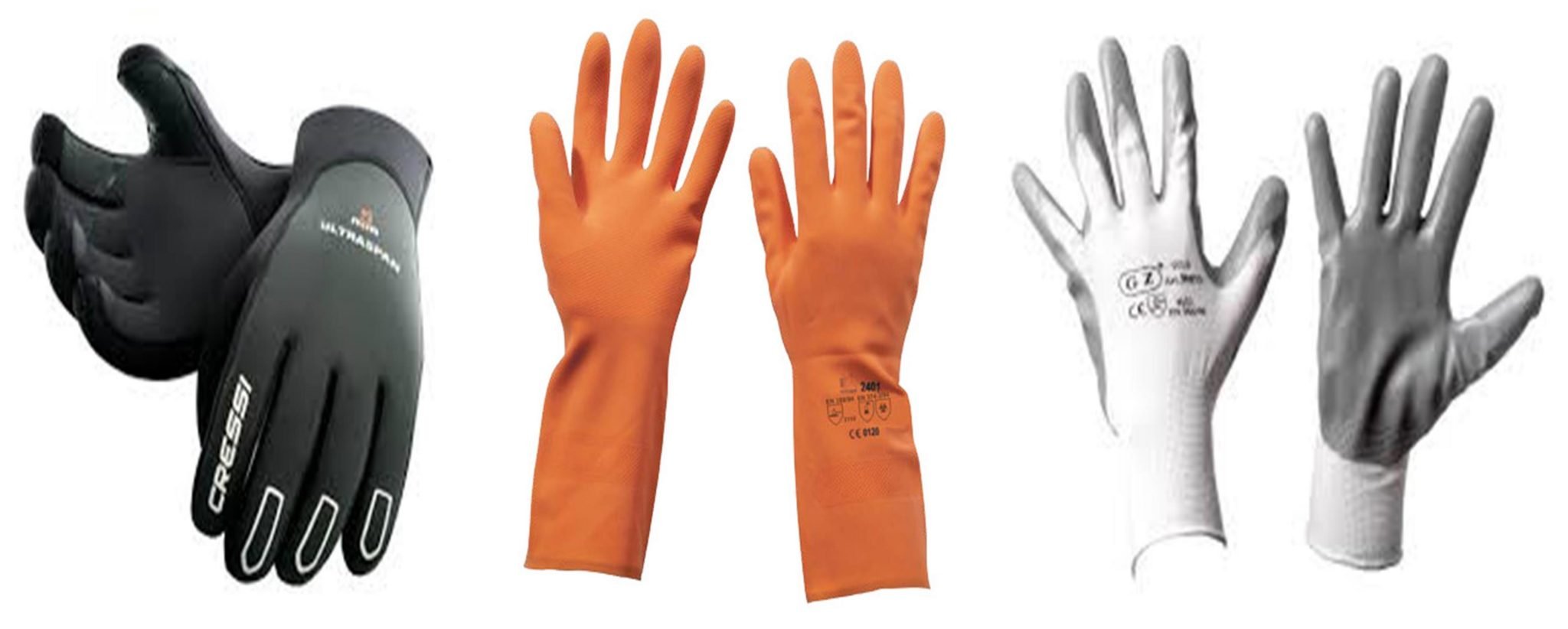
Carpenter’s gloves. They are common gloves for heavy work, which give protection from bumps and scratches.
Latex gloves. They are thin adherents gloves that protect the skin from brief exposure to organic solvents (used in restoration) and etching liquids. They are excellent for applying paint, shellac, wax, and in all jobs that require protection while maintaining good tactile sensitivity.
Neoprene gloves. They are usually blacks, guarantee good protection against prolonged exposure to solvents. They are indicated for paint stripping, but also offer great resistance to abrasions produced by the steel wool.
Nitrile gloves. They are usually green. They guarantee high protection against chemical agents and are very resistant. They are ideal in case of exposure to aggressive solvents, such as caustic soda.
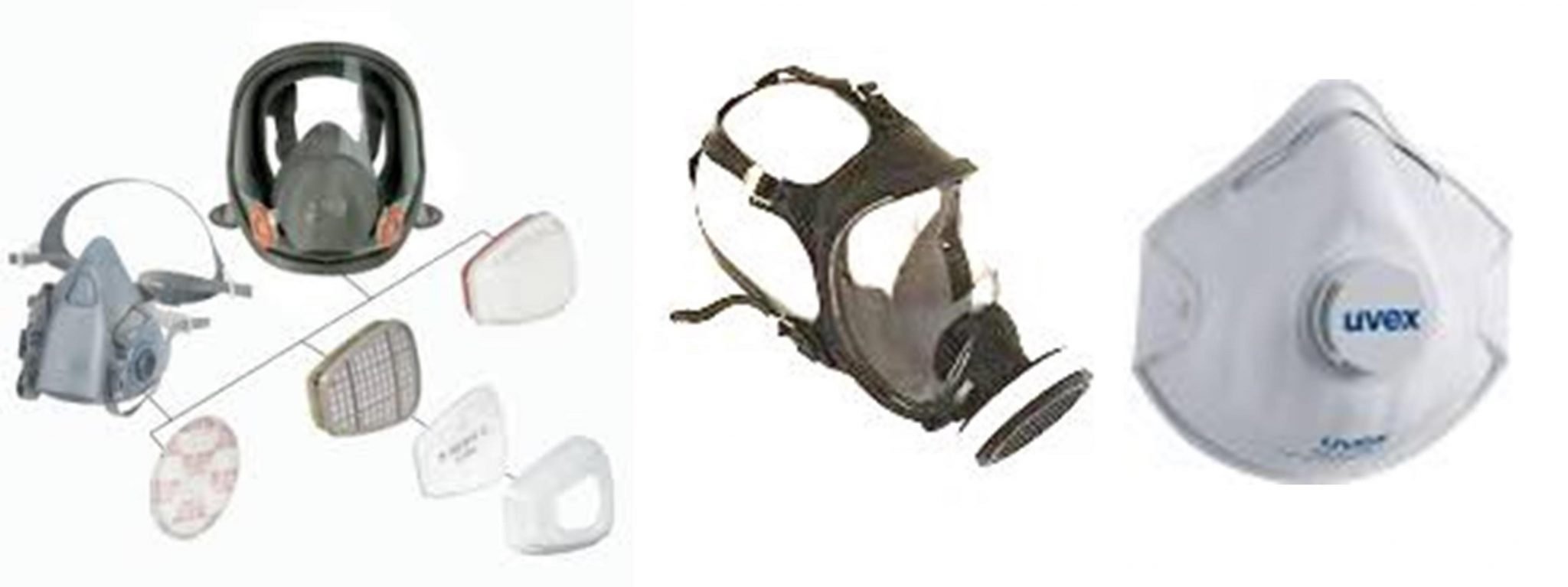
Dust masks. There are many models. In restoration it is important primarily to protect against particles produced from wood which does not create suspensions having particle sizes of less than 0.6 microns; a good quality mask worn correctly is therefore all that is required. (It must always have 2 elastics to ensure good protection)
Masks for organic solvents. They are usually coloured gray. They are masks that, in addition to filtering dust, filter unpleasant odours, and retain organic fumes present in low concentration.
Facial respirators. They are small gas masks which do not however protect the eyes. They have coal filters coals which filter high concentrations of organic vapour and other harmful volatile substances. The filters are usually specific for certain substances. These respirators are recommended when working in the presence of ammonia vapours.
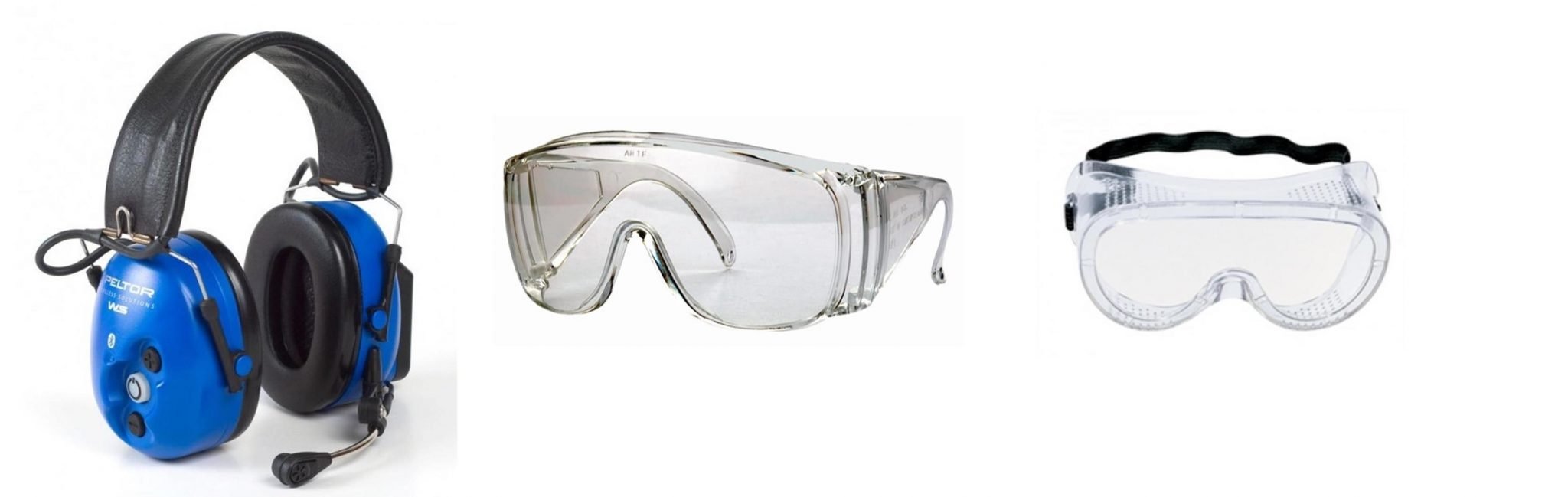
Ear protectors. Made up of ear plugs and ear covers they reduce some of the noise perceived by the ear, usually the best ones, lower by up to 20 db. They are very important because exposure to noise higher than 80 db damages hearing which over time can become chronic hearing loss.
Protective glasses. There are plenty of PVC and polycarbonate models. The choice in this field is related to comfort. The best models are wraparound.
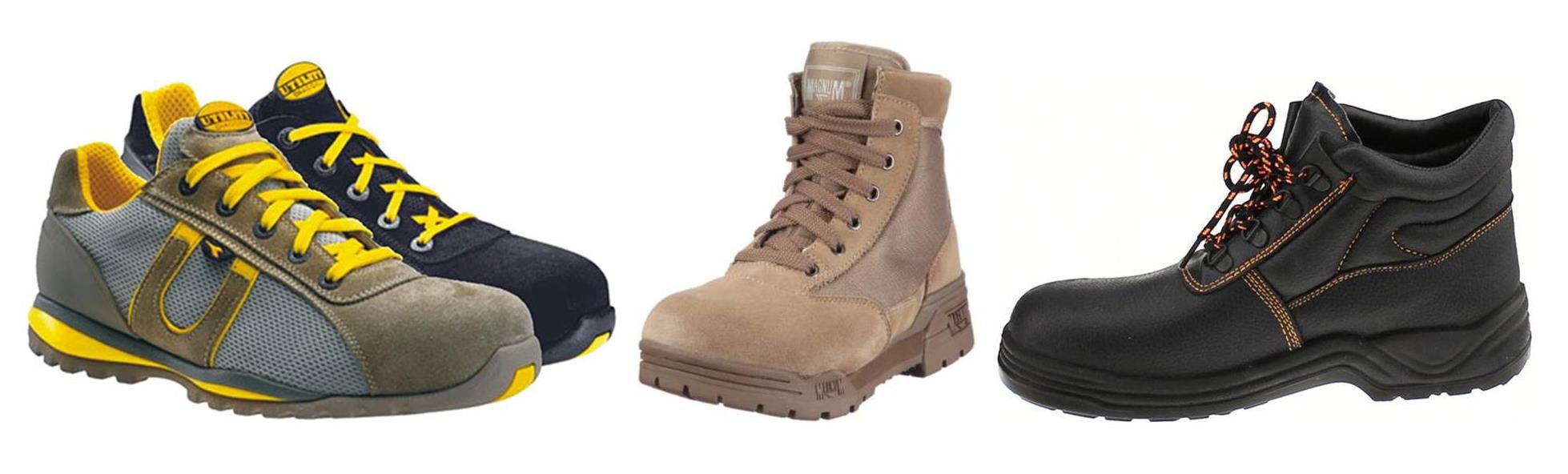
Footwear. Use of safety shoes is highly recommended in the workshop . They must have non-slip soles and antistatic, steel toe and be puncture resistant. Usually they are only used on construction sites, but in the laboratory, there are several occasions in which they can be of value. (e.g. a heavy hammer that falls onto a foot without safety shoes can cause serious injury.)
Ergonomic soles. They are not real protection devices, but they contribute to less fatigue when standing for prolonged periods of time, and are therefore related to security.