Survival of crafts in the industrial revolution
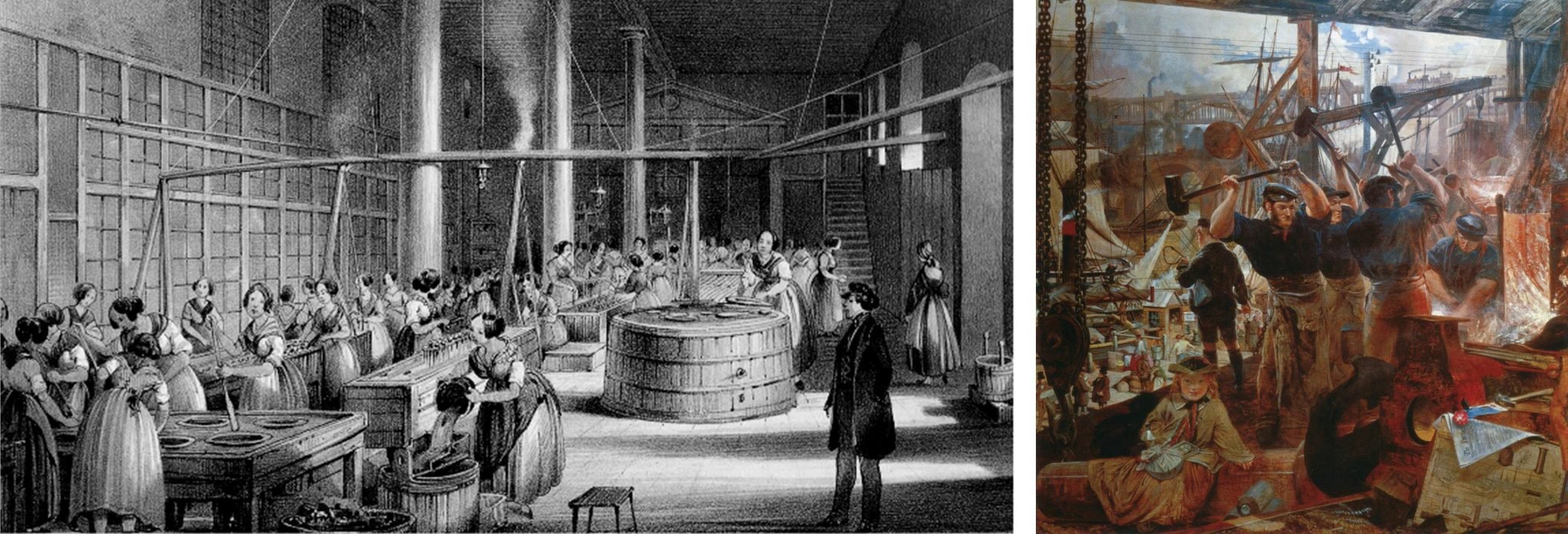
With the industrial revolution which followed, artisan crafts seemed destined to disappear. In terms of high culture, the romantic exaltation of the artist, seen as a defender of the spirituality of art against the utilitarian materialism, put a barrier between art and crafts, ideals and dexterity. While on the economic-productive level, industry, a skilled imitator of craft models, seemed capable of producing at low-cost everything which came out of the workshops of artisans.
The main political and economic ideologies of the nineteenth century, even when opposed, adopted this explanatory framework, so artisan crafts began to be considered residual and archaic both by proponents of industrial capitalism and from theorists of socialist or communist collectivism. And in the latter case, throughout history, it was to have a marked negative impact on the primary prerogative of the craftsman which is to work in total autonomy, through creativity and self-employment.
In historical reality, in much of Europe, however, things went differently: the industrialization did not erase all the artisan crafts. The same factories, with workers of trade and groups of technicians, reproduced and expanded the front of craft skills. At the same time crafts were a resource for industry, so that a continuous exchange was established between worlds which were mistakenly considered separate. By the same token in revolutionary France, with the disappearance of the guilds, the need to train and qualify workers was highlighted and resulted in the creation of the Conservatory of Arts and Crafts.
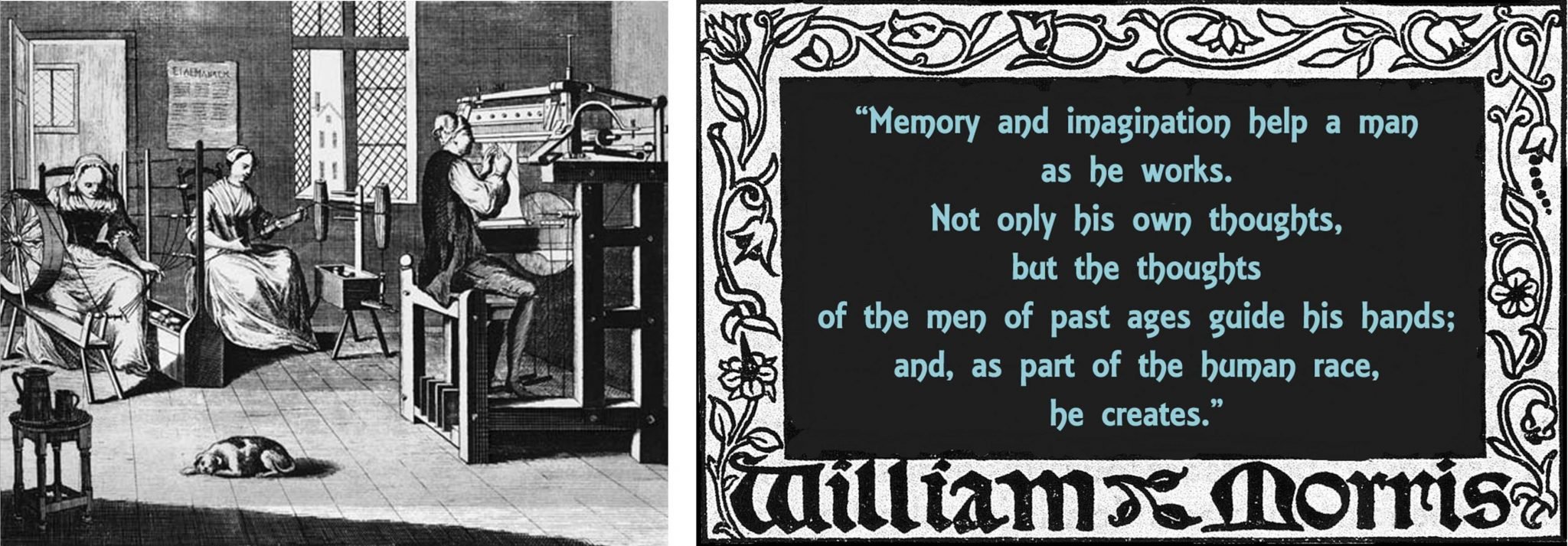
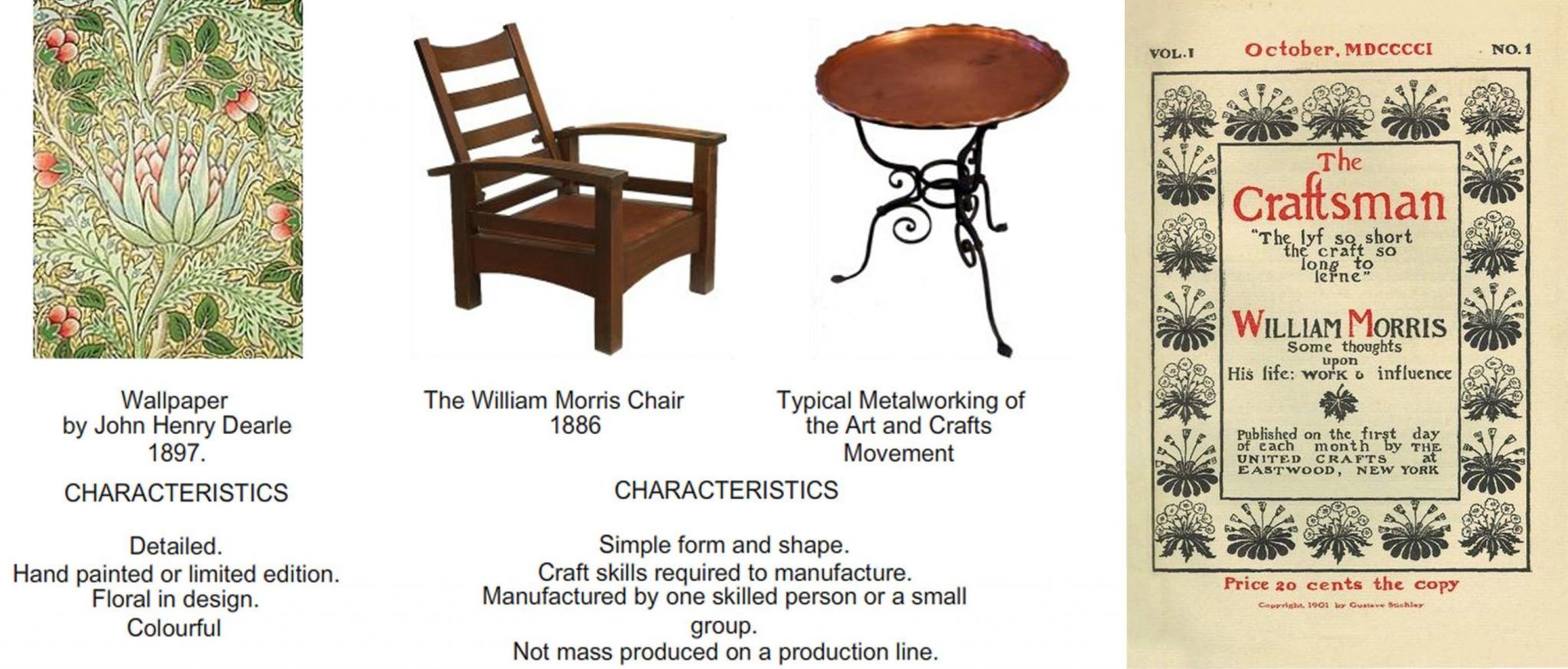
Of particular interest, being the birthplace of the Industrial Revolution, was the criticism of John Ruskin and William Morris of industrial production of the time, made famous by from The Great Exhibition in London in 1851. They took aim at the banality and repetitiveness of industrially produced goods, advocating a revival of medieval crafts. Morris started a manufacturing center (painting, engraving, metal, furniture, etc.) which had a strong influence on the spread of Art Nouveau, in which the artisan crafts were central, designed as a bridge and link between art and industry.
Now consider and discuss with your tutor the following questions:
[bullet_list icon=”play” indent=”10px” style=””]
- Why does artisanal craftsmanship, which looks set to disappear with the industrial revolution, rouse great attention at that time?
- Why isn’t craftsmanship valued by socialist collectivism or by industrial capitalism?
[/bullet_list]